Archive for December, 2009 Page 2 of 2


Heroes: the underground railroad in Rhodesia

Talking about Zimbabwean history reminded me that there are some unsung heroes of Zimbabwe’s struggle for majority rule whom I wish to salute.   These are the people who, rejecting the racist policies of the Rhodesian Front government, organized an illegal underground railroad to secretly transport black and white resisters across the border, usually to Botswana and Zambia.   The whites transported were usually resisting military conscription to fight in a war they disagreed with, a war in support of a cause they believed immoral.  I knew a couple of these railwaymen:  AP (“Knotty”) Knottenbelt, who had been headmaster of Fletcher High School, a state boarding school for black boys, from where he resigned in 1969 rather than raise a Rhodesian flag; he later tutored at the University of Zimbabwe, and the Mugabe Government appointed him to the board of the Posts and Telecommunications Corporation after Independence.     Another railwayman was his bridge partner, Nick Holman (1919-2002), father of the (now former) Financial Times Africa Editor, Michael Holman.   These men and their collaborators deserve praise and admiration for their great personal courage in support of a non-racial society.


Lancaster bombing

This week marks the 30th anniversary of the signing of the Lancaster House Agreement between the British Government and the major political forces in Zimbabwe, an agreement which led to Zimbabwe momentarily becoming – for the first time in its history – a British colony.  Before 1979, Rhodesia had initially been governed from the first European settlement in 1890 as a concession of the British South African Company (advised from 1898 to 1923 by a semi-elected council), and then from 1923 as a self-governing British territory with dominion-like status.  From 1898 onwards the franchise, as in other British-controlled territories in Southern Africa starting in 1836, was a conditional one – in order to vote one had to satisfy certain conditions: age, gender, literacy, education, income, and property-ownership.   These conditions were biased against non-whites, but did not exclude them completely, as I explained here.  Because the franchise was not race-based, white Rhodesians like Ian Smith could delude sympathetic foreigners, and themselves, that they were running a democratic and non-racial government.     

Continue reading ‘Lancaster bombing’

Technorati Tags: ,


That deadline

Nate Fick, whom I saluted here, had an op-ed in the NYT last week on the decision by the Obama administration to announce a deadline for withdrawal, here.  His conclusion:

Announcing the timeline was risky, and it could turn out to be our undoing. The president delivered two intertwined messages in his speech at West Point outlining his Afghan policy: one to his American audience (“I see the way out of this war”), and one to the people of Afghanistan and Pakistan, including the Taliban (“I’m in to win”). The danger of dual messages, of course, is that each may find the other audience, with Americans hearing over-commitment and Afghans hearing abandonment.

The only way to reassure both is to show demonstrable progress on the ground.  A credible declaration of American limits may, paradoxically, be the needed catalyst.”

Technorati Tags:


Can the obese now expect an apology from the medical profession?

Western medicine has a long history of blaming the victims of illness for their illness, attributing moral and character defects to the ill – eg, those suffering from cholera (before the mid 19th century), from physical addictions (until the mid 20th century), and from stomach ulcers (until the discovery of Helicobacter Pylori in 1982).   The most recent morality campaign waged by the medical profession has been against the obese, who are assumed by many medical practitioners to be lazy, weak-willed, or worse.  The medical professions urge the over-weight to diet and to exercise, and they even restrict treatment in some cases to people who are not obese.  Never mind that the scientific evidence for the relationship between regular exercise and appetite is weak, and suggests in any case that the former increases the latter: so that, if anything, more exercise is likely to lead to increased weight, not to reduce it.  

Now, science tells us that appetite – and hence obesity – may also be a function of one’s genes, as this article in tomorrow’s SMH reports

SOME of the children were so fat they had been listed on the British social services ”at risk” register because it was assumed their parents were abusing them with deliberate overfeeding.

”In one case, one of the children had been taken into care,” said Stephen O’Rahilly, a world expert on the genetics of obesity at the University of Cambridge.

But then his research team discovered the problem. The obese children had a section of DNA missing in their genetic code – a fault that produced a very strong drive to eat.

Continue reading ‘Can the obese now expect an apology from the medical profession?’


Robert Mugabe and CIA

One has to wonder if Robert Mugabe was ever on the payroll of the US Central Intelligence Agency, or was an informant for them.    Consider these facts:

  • According to Larry Devlin’s account of his time as CIA Chief of Station in the newly-independent Zaire, CIA sought in the 1960s to recruit agents and paid informants inside the black nationalist political parties and liberation movements in African states.  Why would Southern Rhodesia be different?   Certainly, according to the memoir of Ken Flower, CIA had people stationed in Rhodesia in the 1960s and 1970s.
  • The New York Times reported in 1990 (1990-06-09) that the CIA had played a part in the arrest of Nelson Mandela by the apartheid regime of South Africa in 1962, using an agent the CIA had within the South African ANC.
  • According to Tom Lodge’s history of post-war black politics in South Africa, the South African Pan Africanist Congress (PAC), which was aligned with ZANU (PF), received financial support from the USA.  Lodge gives no sources for this statement.
  • According to Heidi Holland’s biography of Mugabe, the Rhodesian Central Intelligence Organization (CIO) facilitated his and Edgar Tekere’s escape across the border from Rhodesia into Mozambique in 1975 (Holland, pp. 175-6).  Was the CIO acting under advice from CIA?
  • Following Zimbabwean Independence in 1980, the newly-elected Government of Robert Mugabe took two years before permitting the USSR to open an embassy in Zimbabwe.  The USA, the UK and the PRC were each permitted to open embassies immediately.  Mugabe’s party, ZANU (PF), of course had been aligned with (and mainly received support and training from) the Chinese Communist Party and the PLA during the Second Chimurenga while its main rivals, Joshua Nkomo’s PF-ZAPU, had been aligned with (and mainly received support and training from) the CPSU and the Soviet military.    The first Zimbabwean (and before that, Rhodesian and Zimbabwe-Rhodesian) Director of Central Intelligence, Ken Flower, says in his memoir:  “the early advice I received from [Minister of State Security, Emerson] Mnangagwa:  to accept foreign missions as friendly or ‘non-aligned’ until proved otherwise, but in the first instance to make life as difficult as possible for the Russians.” (page 273).
  • For almost two years following Independence, Mugabe met weekly with Ian Smith, the racist and duplicitous Prime Minister of Southern Rhodesia who had made the illegal Unilateral Declaration of Independence (UDI) in 1965, and who resisted majority rule until forced to agree to it by the South African regime of John Vorster.
  • Following Independence, Mugabe retained Ken Flower as head of the CIO until his retirement 18 months later, and then kept him on as a consultant for a period after that.  Flower had been head of the CIO from its foundation in 1963 under Rhodesian Prime Ministers Winston Field and Ian Smith, and Zimbabwe-Rhodesian PM, Bishop Abel Muzorewa.
  • According to a report in Newsweek in February 1982, Joshua Nkomo told a press conference in the then Salisbury (renamed Harare later that year) following his dismissal from the Cabinet, that he had sought South African Government assistance to stage a coup against Mugabe and ZANU (PF), but this request had been refused.
  • For at least several years following Independence, the counter-espionage unit of the Zimbabwe CIO had only two divisions:  one seeking to identify and counter South African espionage activities, and the other seeking to identify and counter Soviet espionage activities.  No staff of the CIO were devoted to identifying or countering US espionage activities.  I was told by various CIO officers (including Flower himself) during the 1980s that this was because the USA was not perceived by the Mugabe Government to pose a threat to the country or to the ruling party.  Such a position was, on the surface at least, quite odd, given the (then) avowedly socialist nature of the ZANU (PF) administration, its communist and anti-colonialist rhetoric, and its ostensibly close links to the regimes of Angola, Cuba, the DDR, the DPRK, Libya and Mozambique.  It should also be recalled that during its first decade of Independence, Zimbabwe experienced regular bombings and other acts of terrorism by agents of the apartheid regime of South Africa; these acts included the destruction by terrorist bombs in 1982 of most of the nation’s airforce.   Moreover, some of the white staff of the Zimbabwe CIO, including some in counter-espionage, were themselves South African agents, as was demonstrated when some of these people subsequently defected to RSA.  Zimbabwe had considerable reason to fear foreign espionage at this time.
  • Western Governments, including the administrations of Margaret Thatcher and Ronald Reagan, were remarkably quiet about Mugabe’s genocidal campaign of violence against the people of Matabeleland in 1983-1987, the Gukurahundi.   Indeed, the UK and the USA expressed far more concern for the fate of the white commanders of the Zimbabwean Airforce, arrested, held illegally, and tortured following the bombings of 1982.  The Reagan administration had added Zimbabwe to its list of countries eligible to receive US military aid in December 1982.
  • Members and supporters of PF-ZAPU, most recently the brave Judith Todd, have long suggested that some senior members of ZANU (PF) were paid CIA agents.

Unless someone like Larry Devlin writes his memoirs, I doubt we will ever know the facts in this case.

Latest revision of this post:  2010-01-04.   Further speculations on Mugabe’s personality here.

References:

Larry Devlin [ 2007]:  Chief of Station, Congo. New York, NY, USA:  Public Affairs.

Ken Flower [1987]: Serving Secretly: Rhodesia’s CIO Chief on Record.  Johannesburg, RSA:  Galago.

Heidi Holland [2008]:  Dinner with Mugabe. Johannesburg, RSA:  Penguin.

Tom Lodge [1983] : Black Politics in South Africa Since 1945. Longman.

Judith Garfield Todd [2007]:  Through the Darkness:  A Life in Zimbabwe. Cape Town, RSA:  Zebra Press.


Poem: Lines for a Friend 1948-1964

Writing just now about Mendelssohn’s sorrow at the death of his close friend, Edward Rietz, brought to mind this poem by Australian poet Michael Dransfield (1948-1973):

Lines for a Friend 1948-1964

“Man comes and tills the field and lies beneath.” – Tennyson

over before you knew it
misdiagnosed and done for
they cremated their error
you became some ashes a little placque a case history
paintings you did are lost also your poems
nothing but ashes in a wall of dead remains
you will not see again the way
the morning sun floods down O’Connell Street
perhaps you are the sun now
perhaps not

childhood was the salt edge of the Pacific
was the school under the old trees
it was soon after that they disposed of you
I went to the funeral you and I were the only two
there really the only two who knew the gods had gone
death and morning the only two,
damned because poets

over before we know it
we pack our lives in little souls and go
out with the tide the long procession
the ant the elephant the worker the child
even those doctors who stood around they will die sometime
their money cannot buy them out of it
we know what is to come a silence teeming
with the unfinished spirits good and bad,
and how we’ve lived determines what we’ll be
next time around, if time’s not buried with us.

Reference:

Thomas W. Shapcott (Editor) [1970]:  Australian Poetry Now. Melbourne, Australia:  Sun Books, p. 210.


Deaf and blind musicology

Looking through some old scores, I come across the following note written by one Edouard Lindenberg, and copyrighted 1951:

Schumann said of Mendelssohn that his first name, Felix (happy) suited him admirably.  Mendelssohn was, in fact, of a carefree disposition, full of gaiety and optimism, and he was spared material cares.  Sorrow almost always passed him by – he never experienced any really severe shocks of any kind. Is it on this account that his music never attains the highest summits?  Or was it perhaps that he was too universally gifted – for he spoke several languages, read Greek fluently and had translated Terence; he was, moreover, one of Hegel’s best pupils and his talent as a draughtsman and painter in watercolours was very superior to that of an ordinary amateur.”

Continue reading ‘Deaf and blind musicology’

Technorati Tags:


Vale: Stephen Toulmin

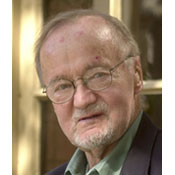
The Anglo-American philosopher, Stephen Toulmin, has just died, aged 87.   One of the areas to which he made major contributions was argumentation, the theory of argument, and his work found and finds application not only in philosophy but in computer science.    

For instance, under the direction of John Fox, the Advanced Computation Laboratory at Europe’s largest medical research charity, Cancer Research UK (formerly, the Imperial Cancer Research Fund) applied Toulmin’s model of argument in computer systems they built and deployed in the 1990s to handle conflicting arguments in some domain.  An example was a system for advising medical practitioners with the arguments for and against prescribing a particular drug to a patient with a particular medical history and disease presentation.  One company commercializing these ideas in medicine is Infermed.    Other applications include the automated prediction of chemical properties such as toxicity (see for example, the work of Lhasa Ltd), and dynamic optimization of extraction processes in mining.

S E Toulmin

For me, Toulmin’s most influential work was was his book Cosmopolis, which identified and deconstructed the main biases evident in contemporary western culture since the work of Descartes:

  • A bias for the written over the oral
  • A bias for the universal over the particular
  • A bias for the general over the local
  • A bias for the timeless over the timely.

Formal logic as a theory of human reasoning can be seen as example of these biases at work. In contrast, argumentation theory attempts to reclaim the theory of reasoning from formal logic with an approach able to deal with conflicts and gaps, and with special cases, and less subject to such biases.    Norm’s dispute with Larry Teabag is a recent example of resistance to the puritanical, Descartian desire to impose abstract formalisms onto practical reasoning quite contrary to local and particular sense.

Another instance of Descartian autism is the widespread deletion of economic history from gradaute programs in economics and the associated priviliging of deductive reasoning in abstract mathematical models over other forms of argument (eg, narrative accounts, laboratory and field experiments, field samples and surveys, computer simulation, etc) in economic theory.  One consequence of this autism is the Great Moral Failure of Macroeconomics in the Great World Recession of 2008-onwards.

References:

S. E. Toulmin [1958]:  The Uses of Argument.  Cambridge, UK: Cambridge University Press. 

S. E. Toulmin [1990]: Cosmopolis:  The Hidden Agenda of Modernity.  Chicago, IL, USA: University of Chicago Press.

Technorati Tags: , ,